29 October 2014
Devolving Transport debate
John Webster reports on Transform Scotland's own devolution debate, held at Glasgow Caledonian University on Thursday 9 October 2014.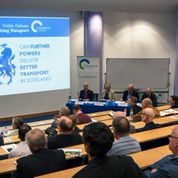
Transform Scotland held a debate immediately after its AGM in Glasgow Caledonian University on 9 October. The debate was on the subject of “Devolving Transport” in the light of the Scottish Referendum result and was led by Transform Scotland’s own Calum McCallum with other presentations by Fiona Crawford (Glasgow Public Health Specialist), Ross Martin (Scottish Council for Development and Industry) and Patrick Harvie MSP (Scottish Green Party).
Phil Matthews (Chair of Transform Scotland) opened the debate by asking what sort of powers should be devolved and how should they be used. After reviewing some recent Transform Scotland projects such as 'Inter-City Express', 'Fix It First' and 'Interchange' and the creation of the Transport Research and Communications (TRAC) offering from Transform, he asked if devolution would allow us to address some of the pressing issues identified by these initiatives and give a more rational approach to how the budget is spent.
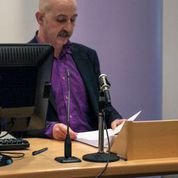 Calum McCallum
 gave an expansive overview of the current situation by commenting on the fact that Transform Scotland had deliberately not taken any stance in the Scottish Referendum as it did not feel that its work would be substantially affected either way. In any event, transport did not feature much during the referendum debate, perhaps because many transport powers are already devolved.
In the aftermath of the Referendum, transport issues will still be dominated by Transport Scotland, which seems to favour road-building over sustainable transport expenditure. Hence for example the poor comparison between rail and road expenditure projected for the next decade or more with £6 billion allocated to the A9 and A96 road enhancements alone! It reflects poorly on the democratic process, given that a survey carried out as part of the 'Fix It First' project showed 84% of the public favoured repairing the current road network before spending on new roads.
There are clearly some powers which could usefully be transferred to Scotland that could lead to progress towards a sustainable transport system. This could be rationalising powers on road traffic regulations and signage, transferring the legal framework for railways so that the rolling stock investment reflects Scotland’s needs, or the ability to give tax relief to encourage more sustainable journeys. These powers, however, are unlikely to lead to substantial change, and it is a new direction overall of policy within Scotland – something which the Scottish Government already largely has the power to do – that is needed to create a truly sustainable transport system in the future.
At a local level, Calum supported the creation of powerful, well funded, integrated regional transport networks and a high degree of cooperation between neighbouring local authorities. Transport for Edinburgh has successfully integrated the trams with the bus network but that should lead to wider integration with First's bus services and ScotRail for example. Only in this way will seamless journeys be possible across the whole of Scotland. The Dutch have a fine example with their Chip Card system, which can be used on any bus, tram, train and ferry from one end of The Netherlands to the other; perhaps Abellio will take the lead on such an initiative?
Calum ended his review of the current situation with observations on the need for more active travel to reduce the appalling health record of the general population. This could be turned around by getting more people to walk or cycle to work where short distances are involved but this needs investment to make such options safe and attractive. Much of Europe knows the answer: cycle lanes to separate cyclists and cars; less traffic in city centres to enhance the walking experience. Poor air quality is another factor that contributes to poor health but thus results from too many vehicles in the city so it is a vicious circle.
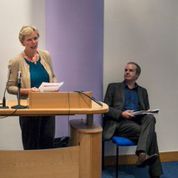 Fiona Crawford
 spoke on the public health benefits of walking and cycling, and of the need to enhance the walking/cycling experience by sensitive design and landscaping. Heavily trafficked streets are less likely to encourage walking and other social interaction due to the noise and danger. Quite low levels of air pollution can cause health issues, yet little is being done to reduce traffic volumes in city centres where air quality standards are breached daily. Many European cities have achieved high levels of active travel due to investment in infrastructure and by removing vehicles from the city centre. Yet, far from killing off commercial activity, the result has been lively attractive centres that draw people in for shopping and social interaction. Are the Scots really any different or does it just require leadership from some of our national and local politicians?
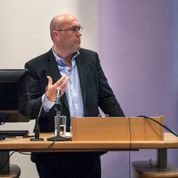 Ross Martin
 commented on the availability of quite a range of powers that are not used either through a lack of vision or fear. Edinburgh Trams is an example of where significant change has taken place, with people that were once opposed now supportive of the trams having seen and used the system, it is likely that demand will grow for the introduction of more extensive transport networks both in Edinburgh and other cities to help handle chronic city-centre congestion due to an over reliance on cars. The rail network also requires a massive makeover with entirely unsuitable rolling stock being used on many routes. Hopefully, the new ScotRail franchisee will improve this situation with what seems forward looking plans. In summary, there are a whole range of issues that need addressed to give better transport links within and between cities and this should be the priority of the Scottish Government with new devolved powers.
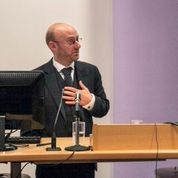 Patrick Harvie
 spoke on the ways to make change happen; this requires both the power and the will. Part of the trouble in the UK is a lack of coherence in thinking; for example, just about every political party thinks that traffic congestion is bad but “thinks” that the people want more roads and big infrastructure projects. Whereas they need to show leadership and convince people that a shift from car to walking, cycling and public transport will be better for their health, their well-being, and the appearance of their cities. In other words, big changes in society require strong political conviction and creating the public appetite and inspiration for change.
Following on from the formal presentations there was a lively
discussion of the issues between the panel and attendees.
The point was made by one member of the audience that “attitudes” need to change within central and local government where the road lobby is still predominant. Two examples were given of road engineers in one area wishing to introduce cycle lanes but being stopped by Councillors who did not see the need. Or the example of road engineers elsewhere not knowing how to find room for cycle access on a four-lane wide road – the car was king!
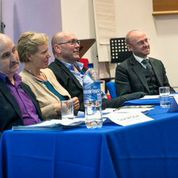
The Panel responded that getting public involvement is the answer as could be seen during the recent Scottish Referendum when everyone was talking about the issues. Politicians need to get similar debates going about the sort of society we want but seem scared to take the initiative. One way might be to allow local authorities to raise local taxes for particular projects and, in this way, get people more interested and involved in the debate.
Another attendee asked why health issues were not taken seriously when there was much evidence linking poor health to lack of activity and poor air quality. One answer, from the Panel, may be the attention given to acute health issues rather than chronic because the latter are more difficult to pin down to particular cases.
The impact of letters and emails from residents to local councillors and MSPs was raised, using the example of Edinburgh where 5% of the transport budget has been allocated to cycling projects. This is at least in part attributable to local campaign groups such as Spokes, which has successfully mobilised cyclists in the area to lobby all concerned over a number of years. This type of work needs to continue in other parts of Scotland, especially in relation to reorganising traffic flows within city centres to allow better active travel facilities because officials and politicians seem unwilling to take the initiative due to pressure from the road lobby, so the non-road lobby needs to speak up!
In concluding the event, a number of points were made regarding devolved transport powers.
- Some motorway development may be inevitable but this should be balanced by similar expenditure on rail so that they compete on level playing field.
- In the 1980s, few had heard of sustainable transport. Now, it is widely understood. The referendum debate showed us that Scottish people want a new, fairer, better society. We need to build on this momentum and the current degree of political involvement.
- Perhaps some powers are better not devolved. Sometimes it is better to work together, particularly to counter corporate lobbying power, for example pressure from the airline industry to cut fuel passenger duty.
We have come a long way and attitudes have changed in recent years on many issues but the pressure needs to be kept up on our political masters to ensure that beneficial change continues. What we need is not necessarily more powers, strategies or policies, but real political will and leadership to change our society.